The invite lands. The date is set. Then comes the quiet panic. What am I going to wear? Event dressing has a habit of feeling bigger than it is. Weddings, galas, work dinners, milestone birthdays. The pressure adds up fast, and it often turns into overspending disguised as confidence. Dressing well does not require draining your savings. It requires clarity. A plan. And honest choices about what you already own, what is worth buying, and what makes sense to rent.
Style should feel expressive, not stressful. Budget decisions should feel grounded, not reactive. This guide breaks down how to decide between buying, renting, or rewearing for events, without guilt and without guesswork. It also shows how a simple budget calculator can anchor decisions before emotions take over.
Quick Style Summary
- Not every event needs a new outfit
- Buying works best for repeat value
- Renting suits one off moments
- Rewearing builds confidence and saves money
- Planning beats impulse every time
Why event outfits feel expensive before they are
Event wear carries emotional weight. Photos last. Memories stick. People remember how they felt, and clothing plays a role in that feeling. Brands know this. Marketing leans into urgency, novelty, and fear of repetition. The result is a closet full of pieces worn once and forgotten. The cost is not just financial. It is mental clutter.
Breaking that cycle starts by reframing the goal. The goal is not to look new. The goal is to look like yourself in the right context. That shift opens up smarter choices. Sometimes that choice is buying. Sometimes renting. Sometimes reaching for something already hanging in your wardrobe.
Start with numbers, not mood
Before deciding what to wear, decide what to spend. That number should sit comfortably within your monthly finances. Not aspirational. Not influenced by the dress code wording. A clear spending ceiling removes friction later.
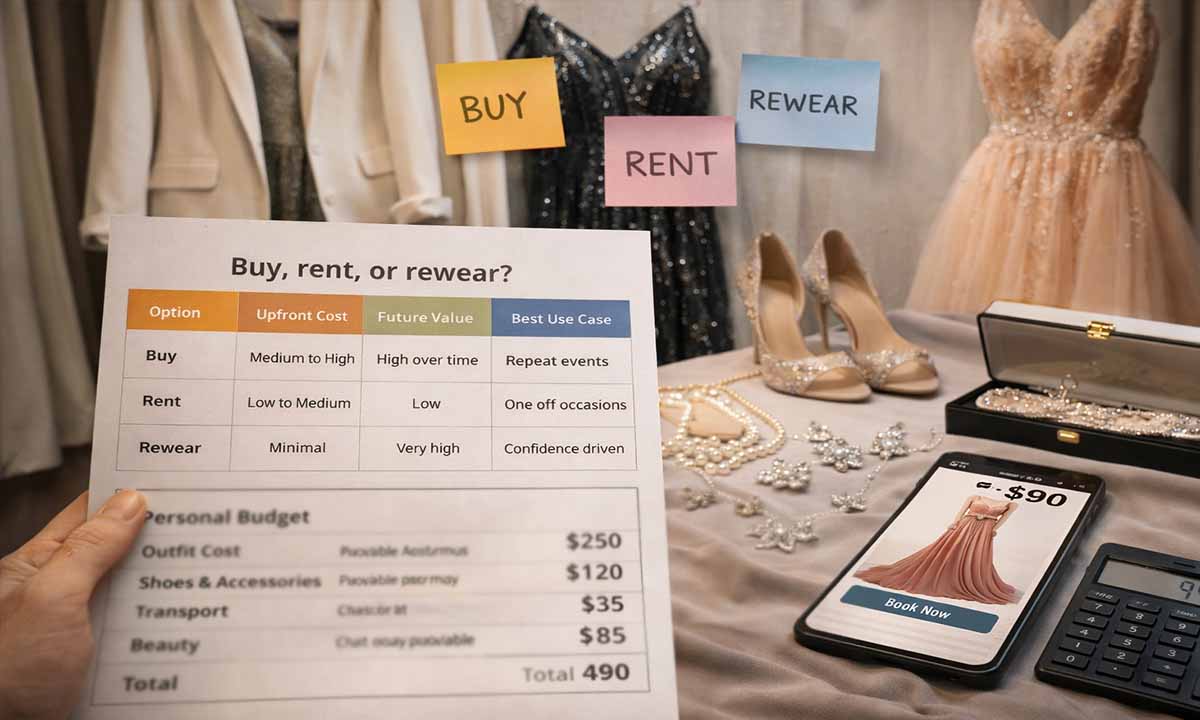
Using a simple budget view helps put the outfit into perspective. Shoes, tailoring, accessories, and grooming count too. Seeing the full picture makes it easier to say no to unnecessary extras.
Buying an outfit that earns its place
Buying makes sense when the piece will return value over time. That value may be repeat wear, versatility, or emotional confidence. The strongest purchases are not trend led. They adapt. A structured blazer. A well cut dress. Shoes that walk comfortably and still look sharp.
Many women build long term style by focusing on adaptable pieces rather than event specific outfits. A strong foundation makes future events easier. This thinking aligns naturally with the idea of a capsule wardrobe, where every item earns its space.
Buying works best when
- The item works across multiple occasions
- The fit is excellent or easily tailored
- The colour pairs with existing pieces
- The quality holds up over time
A dress worn three times is already cheaper per wear than a rental used once. Cost per wear is a calmer metric than sticker price. It encourages patience and smarter selection.
Renting for moments that do not repeat
Some events are singular. Black tie galas. Destination weddings. Statement moments where drama belongs to the night, not your wardrobe long term. Renting shines here. It allows access to bold silhouettes and premium fabrics without long term commitment.
Renting also frees mental space. No storage. No regret. No pressure to justify the purchase later. The key is choosing rentals intentionally, not as a shortcut to impulse.
Renting works best when
- The dress code is highly specific
- The style is outside your usual taste
- The event is unlikely to repeat
- Photography matters more than longevity
The smartest renters plan early. Availability improves. Alterations are easier. Costs stay predictable. Last minute rentals often erase the savings advantage.
The underestimated power of rewearing
Rewearing has quietly become a style statement. Not out of necessity, but intention. Wearing something again signals confidence. It shows comfort with your choices. It also allows styling to do the talking.
A dress worn differently feels new. Shoes change the mood. Hair shifts the tone. Accessories create contrast. Many women rotate looks seasonally without buying anything new, simply by reimagining combinations.
Fashion history supports this mindset. Personal style icons repeat silhouettes and shapes. They refine rather than replace. Understanding how trends cycle helps remove the pressure to constantly update, something explored in pieces like timeless fashion trends.
How to decide, buy, rent, or rewear
Decision making becomes easier with a simple framework. Ask practical questions. Answer them honestly. The clarity that follows reduces regret.
Ask yourself
- Will I wear this again within twelve months
- Does it work with shoes I already own
- Is the event indoors, outdoors, or mixed
- Will photos matter more than comfort
If most answers lean toward repeat use, buying wins. If the answers point to one night impact, renting fits. If the outfit already exists, rewearing becomes the quiet power move.
Cost clarity with visual planning
Seeing numbers in isolation is abstract. Seeing them in context changes behaviour. That is why writing down totals matters. Outfit cost plus extras. Transport. Beauty. Accessories. It adds up.
| Option | Upfront Cost | Future Value | Best Use Case |
|---|---|---|---|
| Buy | Medium to High | High over time | Repeat events |
| Rent | Low to Medium | Low | One off occasions |
| Rewear | Minimal | Very high | Confidence driven |
Social pressure and the myth of outfit repetition
Most people do not notice repeated outfits. They notice posture. Ease. Presence. The fear of being seen twice in the same look is louder internally than externally. Social platforms amplify this fear, but real life rarely mirrors that intensity.
Fashion sustainability research also reinforces this mindset. Wearing clothing longer reduces environmental impact significantly, a point discussed broadly by organisations like UN Environment Programme.
Styling confidence beats novelty
An outfit works when the wearer feels settled. Tugging, adjusting, second guessing breaks the illusion. Familiar clothing often performs better than new pieces because the body already trusts it.
Building a relationship with your wardrobe takes time. Each rewear strengthens that connection. Each thoughtful purchase supports it. Each rental fills a gap without clutter.
A calmer way to show up
Event dressing does not need to feel transactional. It can feel intentional. Budgeting does not limit style. It clarifies it. Choosing when to buy, when to rent, and when to rewear creates space for expression without stress.
The most memorable outfits are rarely the most expensive. They are the ones worn with ease. That ease starts long before the event, with a plan, a number, and the confidence to choose wisely.